 info@abode-mgmt.com
 Book a Property Management Consultation
 970-279-3880

For Fort Collins landlords, the difference between normal wear and tear and tenant-caused damage matters most at move-out. Normal wear and tear is the expected deterioration that happens when a rental is used as intended. Damage usually involves negligence, carelessness, accident, abuse, or a tenant failing to follow the lease.
This distinction affects security deposit deductions, maintenance planning, move-out inspections, and tenant communication. In Colorado, landlords should be careful when charging tenants for damage and should keep clear documentation to support any deductions. This guide explains how Fort Collins rental owners can evaluate common move-out issues and reduce disputes.
Key Takeaways
- Normal wear and tear is expected deterioration from ordinary use, while damage usually involves misuse, neglect, accident, or abuse.
- Colorado landlords should not deduct from a security deposit for normal wear and tear.
- Move-in and move-out documentation is one of the best ways to prevent disputes.
- Fort Collins rentals may experience extra wear from snow, mud, pets, bikes, students, outdoor gear, and seasonal weather.
- A professional property manager can help owners document condition, coordinate repairs, and handle deposit decisions more consistently.
What Is Normal Wear and Tear?
Normal wear and tear is the natural decline that happens when someone lives in a property. Even a responsible tenant will leave behind some signs of use. Paint fades, flooring wears down, carpets flatten, and fixtures age over time.
Common examples of normal wear and tear may include:
- Minor scuffs on walls
- Small nail holes from hanging pictures
- Light carpet wear in high-traffic areas
- Faded paint
- Loose door handles from regular use
- Worn appliance parts from age
- Minor scratches on flooring from ordinary use
- Dust or light residue after normal occupancy
The key question is whether the issue happened through normal use of the rental. If the answer is yes, it is usually part of the owner’s regular maintenance responsibility.
What Counts as Tenant-Caused Damage?
Tenant-caused damage goes beyond ordinary use. It may happen because of negligence, accident, misuse, unauthorized changes, lack of care, or lease violations. Common examples of damage may include:
- Large holes in walls
- Broken doors or windows
- Pet urine damage
- Deep carpet stains
- Burn marks
- Missing fixtures
- Broken appliances caused by misuse
- Cracked tiles from impact
- Unauthorized paint colors
- Damaged cabinets
- Water damage from an unreported leak
- Yard damage caused by neglect
If the issue would not be expected from normal living, it may be damage. However, owners should still evaluate the property’s age, condition at move-in, lease terms, and documentation before making deductions.
Why This Distinction Matters for Security Deposits
Security deposits are often where wear-and-tear disputes begin. If an owner withholds money for something that qualifies as normal wear and tear, the tenant may dispute the deduction. If the owner does not charge for legitimate damage, the owner may absorb costs that should have been the tenant’s responsibility.

The safest approach is to document everything and make decisions based on evidence, not frustration. A worn carpet in a ten-year-old rental is different from a new carpet with large stains after one lease term. Faded paint after several years is different from unauthorized dark paint or marker on the walls.
When in doubt, landlords should review Colorado requirements and consult a qualified legal professional for legal questions.
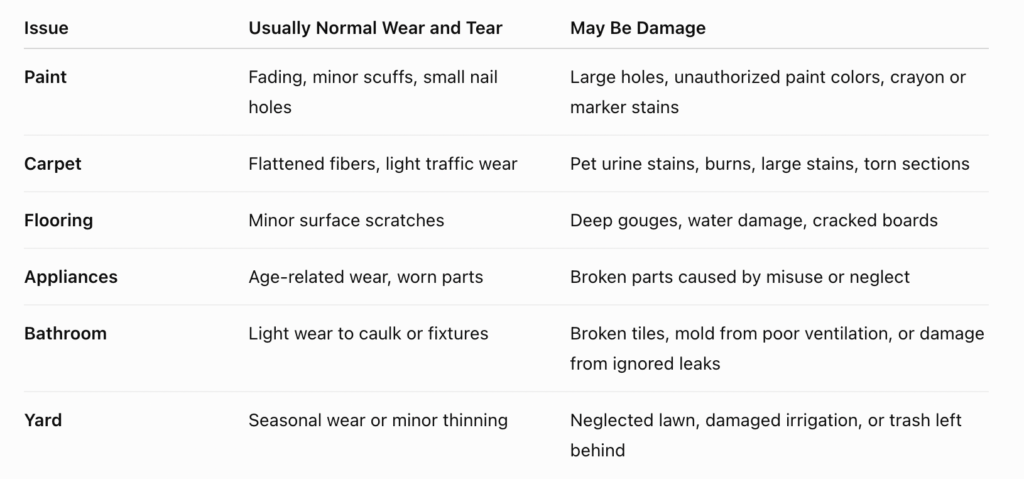
Common Move-Out Issues and How to Evaluate Them
How Should Fort Collins Landlords Document Property Condition?
Documentation is the best defense against move-out disputes. Before a tenant moves in, landlords should complete a detailed inspection with photos or video. The inspection should show walls, floors, appliances, bathrooms, windows, doors, cabinets, exterior areas, and any existing damage.
At move-out, complete the same type of inspection and compare the condition against the move-in records. Keep copies of the lease, inspection forms, tenant communication, maintenance requests, repair invoices, cleaning invoices, and photos.

This process helps separate pre-existing conditions from tenant-caused damage. It also makes deposit decisions easier to explain.
What Local Factors Affect Fort Collins Rentals?
Fort Collins rental properties experience local wear patterns that owners should plan for. Snow, mud, hail, wind, and freeze-thaw conditions can affect flooring, entryways, roofs, gutters, exterior paint, and landscaping. Tenants may also have bikes, outdoor gear, pets, or recreational equipment that add wear to garages, patios, yards, and storage areas.
Rental demand connected to Colorado State University, local employers, and Northern Colorado’s outdoor lifestyle can also affect tenant turnover and property use. Owners should prepare properties with durable materials, clear lease expectations, and regular maintenance.
For example, washable paint, durable flooring, entry mats, clear pet policies, and seasonal maintenance can reduce confusion when move-out inspections happen.
How Can Landlords Reduce Damage Before It Happens?
Preventing damage is easier than arguing about it later. Owners can reduce risk by setting clear expectations at move-in and maintaining the property consistently. Helpful steps include:
- Use a strong lease
- Complete a move-in inspection
- Provide clear maintenance reporting instructions
- Respond quickly to leaks and repair issues
- Use durable flooring and finishes
- Set clear pet and yard care rules
- Conduct periodic property checks when appropriate
- Keep communication in writing
Tenants are more likely to care for a rental property when expectations are clear and maintenance is handled professionally.
Expert Insight: Look at Age, Cause, and Documentation
The most important question is not only what the issue looks like. It is how it happened, how old the item is, and what documentation shows.

A scratched floor may be normal in a long-term tenancy, but not if the scratches are deep and caused by dragging furniture without care. A dirty oven may be a cleaning issue. A broken oven door may be damage. A worn blind may be age-related. Missing blinds may be chargeable.
Experienced property managers look at the full picture: move-in condition, useful life, lease terms, tenant reports, maintenance history, and final inspection photos. This helps owners make fair, defensible decisions.
Frequently Asked Questions About Wear and Tear in Fort Collins Rentals
Can a landlord charge for repainting?
It depends on the reason repainting is needed. Faded paint or minor scuffs may be normal wear and tear. Large marks, unauthorized paint, smoke damage, or holes that require significant repair may support a deduction if documented properly.
Are carpet stains normal wear and tear?
Light wear in high-traffic areas may be normal. Large stains, pet urine, burns, odors, or torn carpet usually go beyond ordinary wear. Carpet age and move-in condition matter when deciding whether a charge is reasonable.
Can landlords charge for cleaning?
Landlords may be able to charge when cleaning goes beyond ordinary move-out expectations or lease requirements. Owners should document the condition with photos and keep cleaning invoices. Normal light cleaning may be harder to justify as tenant damage.
What is the best way to avoid deposit disputes?
Use detailed move-in and move-out inspections, take photos, keep invoices, document maintenance, and communicate expectations clearly. Good records make it easier to explain any deductions and avoid misunderstandings.
Final Thoughts
For Fort Collins landlords, understanding normal wear and tear vs. damage is essential for protecting the property and handling move-out costs fairly. Normal use is part of rental ownership. Damage caused by neglect, misuse, or lease violations should be documented and addressed properly.
Abode Property Management helps Northern Colorado rental owners with leasing, maintenance coordination, inspections, tenant communication, and property management support. If you want help protecting your Fort Collins rental and reducing move-out disputes, contact Abode Property Management to learn how professional management can help.